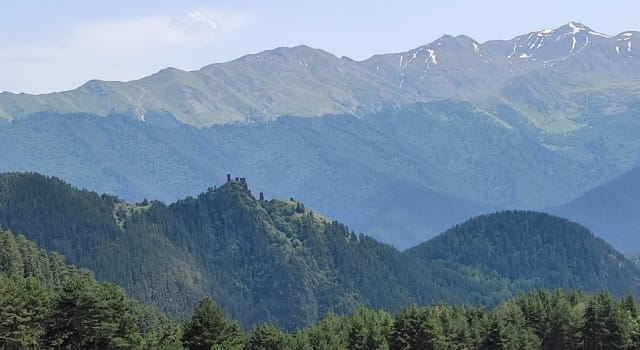
The Greater Caucasus • Northeastern Georgia
Tusheti Travel Guide: The Wild Alpine Frontier of Georgia
Written by Roman Burduladze • Local Mountain Guide & Driver
Last updated & road status verified: September 2026
Main Hubs & Altitude
Omalo (1,880m–2,050m), Dartlo (2,000m), Bochorna (2,345m). One of Europe’s highest inhabited regions.
Road Access
Strictly 4x4 only via Abano Pass (2,826m). Unpaved, high-clearance essential. No sedan or crossover access.
Best Season
Early June to early October. Abano Pass is snowbound and closed for traffic the remaining 8 months.
Cash & Connectivity
No ATMs anywhere in Tusheti. Carry 100% cash (GEL). Reliable Silknet/Geocell & Magti signal in Omalo; Starlink in select hubs.
01. What to Expect Before Traveling to Tusheti
Tusheti is not a casual weekend getaway; it is a remote alpine valley isolated behind the 2,826-meter Abano Pass. Cut off from the modern world for nearly eight months of the year, this protected highland operates entirely on mountain rhythms: solar power, spring water, satellite communication, and centuries of customary law.
Go anyway.
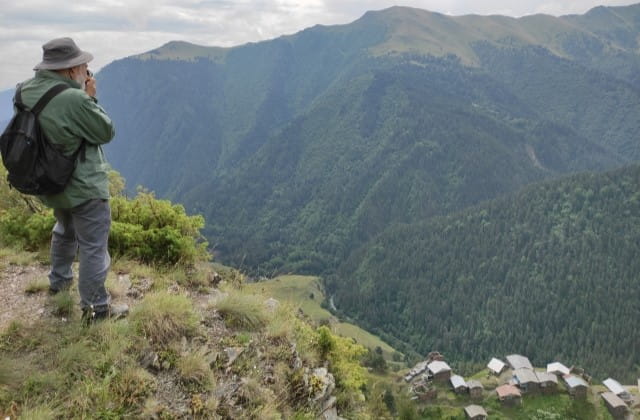
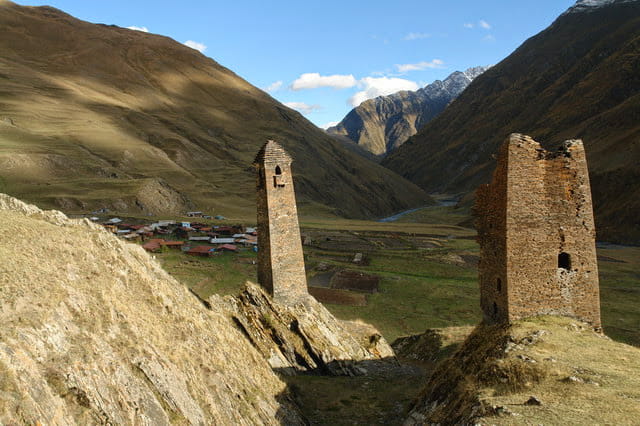
This is one of the rare corners of Eurasia where medieval pastoral life remains an active way of being, not a recreated open-air museum. Fortified slate towers rise above steep valleys, shepherds guide tens of thousands of sheep along vertigo-inducing ridges, and sacred shrines (khati) anchor the spiritual landscape. Reaching Tusheti demands deep respect, self-reliance, and serious 4x4 logistics. Rushing through these four historic communities in a single night is the greatest travel mistake—give this wilderness at least three to four days to truly reveal itself.
02. Abano Pass Logistics & Seasonal Access
The Abano Pass (2,826m)
Route: Kvemo Alvani – Omalo (72 km)
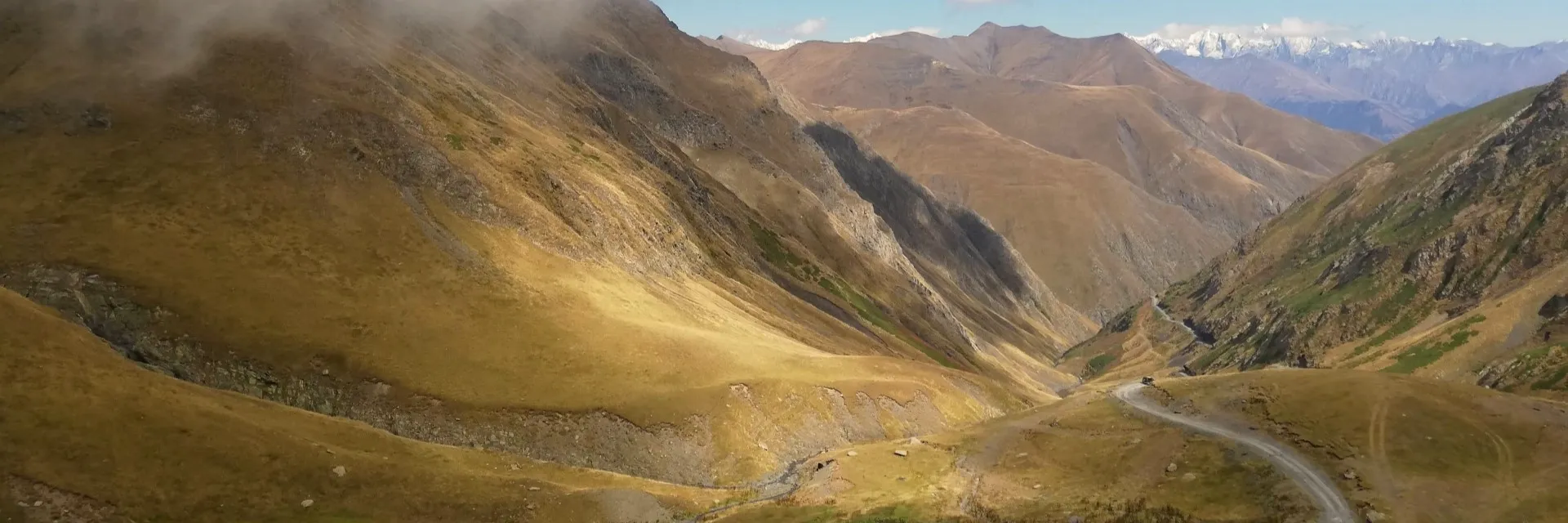
The only vehicular artery into Tusheti is widely considered one of the Caucasus’s most demanding mountain roads, requiring complete focus and a capable 4WD vehicle. Unpaved, carved directly into vertical shale cliffs, and crossing multiple waterfalls, it demands a minimum of 4 to 5 hours of focused mountain driving.
Travel over Abano Pass strictly requires a capable high-clearance 4WD off-road vehicle. Low-slung AWD crossovers, sedans, and drivers without alpine gravel experience should never attempt this route independently. Continuous engine braking is mandatory to prevent brake failure on 2,000-meter descents.
👉 Read the full breakdown: Abano Pass: The Thrilling Gateway to Tusheti, Georgia →
The Seasonal Window
Access: Early June to Early October
Tusheti operates on a strict, weather-dictated schedule. The Abano Pass typically opens in early June as road crews clear winter snow and landslides, remaining navigable through mid-to-late October.
Peak hiking and horseback season runs from late June through September, when alpine passes shed their snowdrifts, high pastures bloom, and family guesthouses are fully active. Travel in early June offers raw landscapes and cascading waterfalls, while October brings golden autumn colors—though early snowfalls can temporarily halt pass traffic.
📌 Tushetiland Driver Field Note — Road Conditions & Timing:
In dry summer conditions, the drive from Kvemo Alvani to Omalo averages 4 to 4.5 hours with brief scenic stops. After heavy rain, waterfall crossings swell and shale debris can temporarily slow traffic. We strongly advise departing early in the morning (by 07:00–08:00) from Alvani to navigate the pass before afternoon clouds roll in and water levels rise.
⏱️ Drive Times
• Tbilisi to Kvemo Alvani: ~2.5 hrs
• Telavi to Kvemo Alvani: ~30 mins
• Kvemo Alvani to Omalo: 4–4.5 hrs
🚙 Vehicle Options
• Private 4WD Hire (Delica / Land Cruiser)
• Local shared seats from Alvani center
• Dedicated luggage & support vehicles
🎒 Luggage & Prep
• Use soft duffels or rucksacks
• Avoid hard-shell rolling suitcases
• Pack warm layers for the 2,826m pass
03. The Four Historic Communities: Navigating Tusheti’s Valleys
Chagma Community & Omalo Hub
Landscape: Pine woodlands & elevated plateaus
Key Sites: Upper Omalo, Keselo Towers, Shenako, Diklo, Kumelaurta
The administrative heart of Tusheti. Guarded by the restored medieval towers of Keselo, this forested valley is famed for traditional timber-balconied homes and the historic border fortress of Diklo facing Dagestan.
Omalo Guide • Keselo Towers • Shenako • Diklo
Gometsari Community
Landscape: Precipitous canyons & dizzying ridges
Key Sites: Bochorna, Dochu, Jvarboseli, Beghela, Verkhovani
Carved by the southern Alazani, this valley hosts sheer cliffside hamlets and Bochorna (2,345m), widely described as Europe’s highest inhabited settlement, alongside the multi-level stone architecture of Dochu.
Pirikiti Community
Landscape: Deep northern alpine gorge
Key Sites: Dartlo, Kvavlo, Chesho, Parsma, Girevi
The defensive heartland of Tusheti. Stretches along the Pirikiti Alazani toward Chechnya, defined by multi-story fortified towers, step-pyramid slate roofs, ancient pagan petroglyphs, and medieval stone citadels.
Dartlo Guide • Parsma Citadels • Girevi Outpost • Unagira Ridge Trail
Tsovata Community (Batsbi Valleys)
Landscape: Untouched wilderness & dramatic ruins
Key Sites: Indurta, Sagirta, Mozarta, Tsovata Gorge
The ancestral domain of the Tsova-Tush (Batsbi) people in the far western heights. Abandoned after 19th-century landslides and depopulation, it stands today as Tusheti’s most isolated valley for high-altitude trekking and 4x4 exploration.
★ Strict 4x4 Expedition & Remote Trekking Zone Only
04. Local Customs and Shrine Regulations
Tusheti is governed by centuries-old customary laws and pre-Christian sacred geography. These are not folklore suggestions or historic reenactments—they are strictly observed spiritual boundaries. Disregarding local customs offends host communities and desecrates sacred ground.
Sacred Shrines (Khati)
Scattered along ridges and village borders are ancient stone shrines adorned with sacred bells and horns.
• Strict Boundary: Entering the shrine precinct without local elders is forbidden.
• Gender Rules: Women are strictly prohibited from approaching Khati grounds. Look for warning bells.
• Conduct: Never step on shrine stones and maintain absolute silence nearby.
The Strict Pork Taboo
Tusheti maintains a complete, uncompromising regional ban on pork and pork-derived products.
• Zero Pork in the Region: Never bring pork meat, sausages, ham, bacon, or lard past the Abano Pass into Tusheti.
• Cultural Respect: This taboo stems from ancient ritual purity, not dietary preference. Bringing pork into a village or cooking it in a guesthouse is a severe violation.
• Gear Check: While processed leather shoes are fine, strictly avoid raw pigskin gear or accessories.
Mountain Etiquette & Sheep Dogs
Pastoral rhythms dictate daily highland life. Respecting working locals and wildlife boundaries is vital.
• Shepherd Dogs: Caucasian sheep dogs (Nagazi) protect vast flocks against predators. If you encounter a flock: stop, do not run, keep trekking poles low, and shout for the shepherd.
• Private Courtyards: Local hospitality is immense, but family spaces are private. Never enter compounds uninvited.
• Ritual Toast: Accept traditional mountain beer (Aludi) with two hands when offered by elders.
“In Tusheti, the trail is not merely a path—it is a living corridor carved through sheer slate, guarded by ancient stone sentinels and pastoral memory.”
05. Traditional Tushetian Food & Gastronomy
Isolated for much of the year, Tusheti developed a unique culinary identity deeply tied to high-altitude transhumance sheep farming. Highland food is simple, rich, and built for endurance and shared mountain hospitality.
• Tushetian Guda Cheese: Aged in whole sheepskin (guda) for up to 60 days, this pungent, unpasteurized raw sheep’s milk cheese carries an unmistakable earthy terroir.
• Kotori: Tusheti’s feather-light response to khachapuri—paper-thin dough rolled with salted cottage curd (dambalkhacho/erbo) and cooked dry on a scorching hearth plate before being brushed with melted butter.
• Aludi (Highland Ritual Beer): A traditional, lightly fermented mountain beer brewed from barley malt, wild hops, and pure mountain water, prepared primarily for religious festivals and community gatherings at village shrines.
06. Best Trekking & Horseback Routes in Tusheti
Tusheti is Georgia’s premier alpine wilderness for multi-day trekking and equestrian expeditions. Trails traverse medieval defensive corridors, cross glaciated passes into neighboring Khevsureti, and access pristine high-altitude lakes.
Omalo to Girevi via Pirikiti Gorge
Distance: ~38 km | Duration: 2-3 Days | Difficulty: Moderate
The quintessential Tushetian trek linking stone citadels along the northern river gorge. Passes through the fortified village of Dartlo, the hanging fortress of Kvavlo, Chesho, and Parsma before reaching Girevi. Guesthouse accommodation is available in each village.
• Key Highlight: Fortress architecture, step-pyramid roofs, guesthouse hospitality.
Tusheti to Khevsureti via Atsunta Pass ~3,431–3,520 m
Distance: ~70 km | Duration: 5-6 Days | Difficulty: Strenuous
Georgia’s premier multi-day wilderness route. From Girevi, the trail ascends alpine pastures beneath Mt. Tebulo, crosses the scree slopes of Atsunta Pass, and drops down into the medieval towers of Mutso and Shatili. A border permit (obtained in Omalo or Girevi) and complete camping self-sufficiency are mandatory.
• Key Highlight: Untamed wilderness backpacking, tent camping, border checkpoint permit required.
Lake Oreti Alpine Ridge Ascent (2,650m)
Distance: ~14 km return | Duration: 6-8 Hours | Difficulty: Moderate to Steep
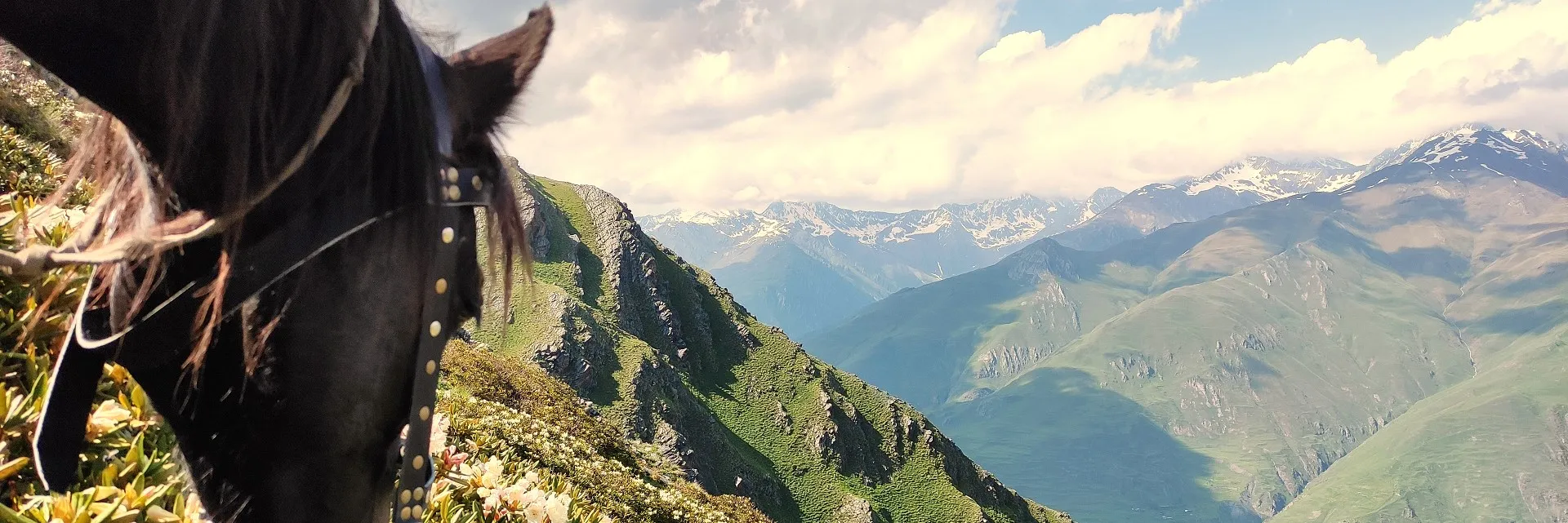
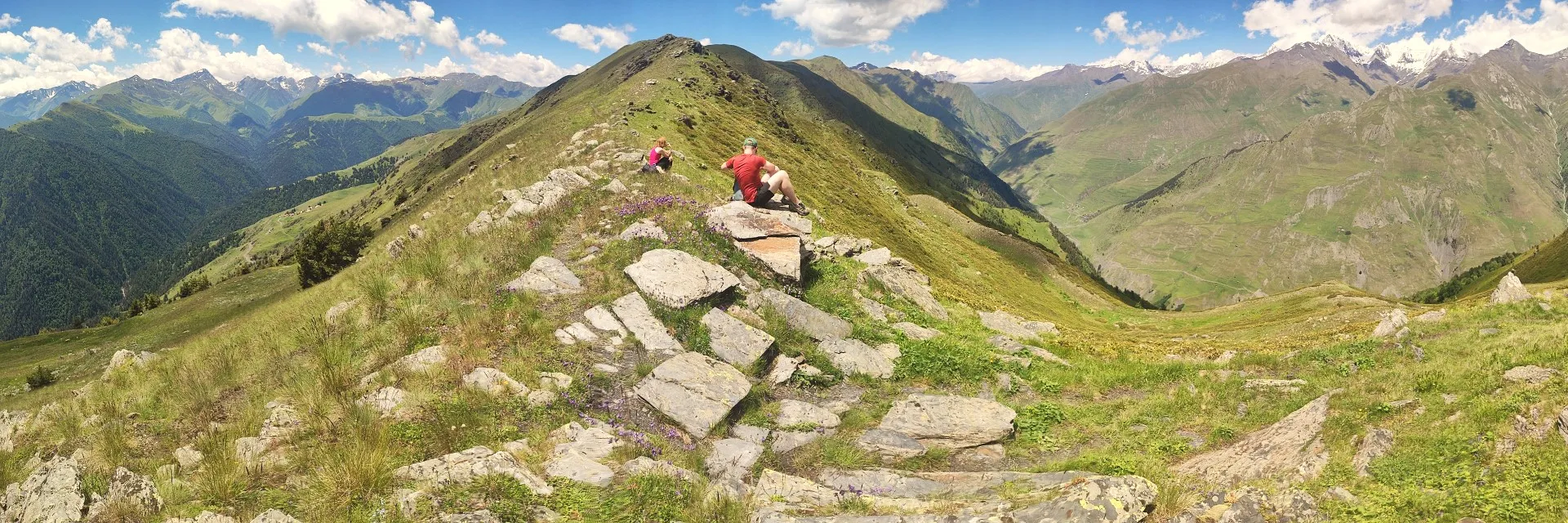
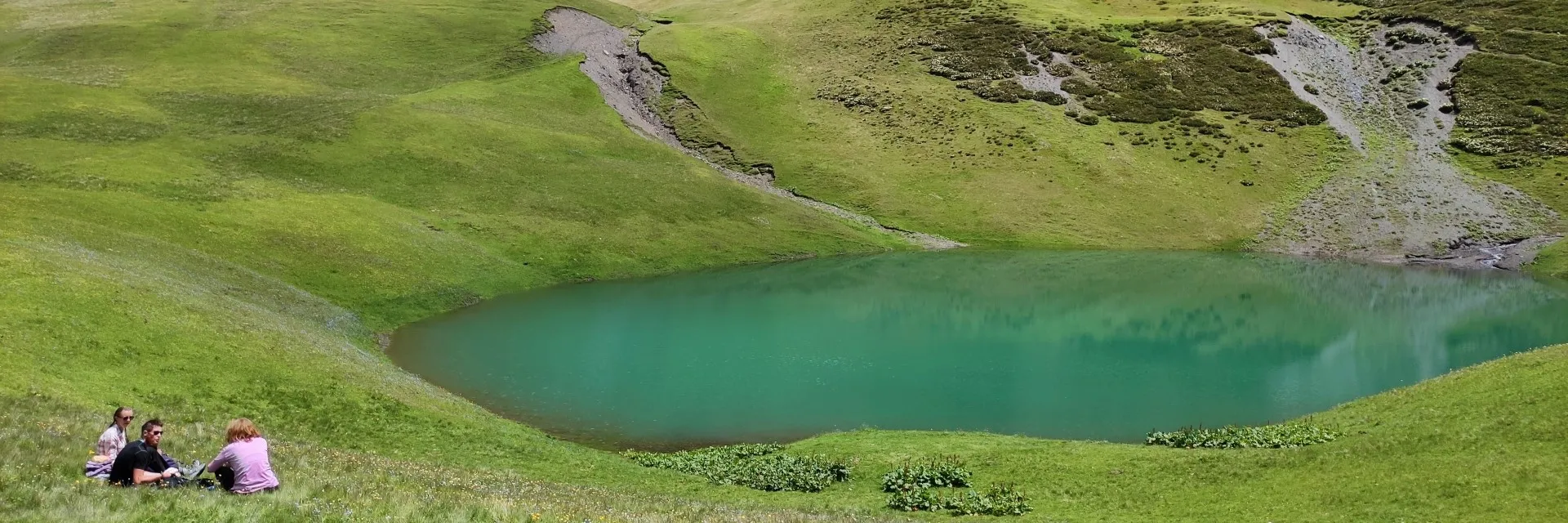
The top day trek and premier horseback trail from Omalo or Kumelaurta. Climbs steeply through dense pine woodlands to panoramic alpine ridgelines overlooking both Pirikiti and Gometsari ranges. Best in early summer when snowmelt fills the lake basin.
• Key Highlight: Panoramic 360° views, rewarding day hike, ideal for horse riding.
👉 Explore the Trail:Oreti Lake: Alpine Day Hike Above the Clouds of Tusheti →
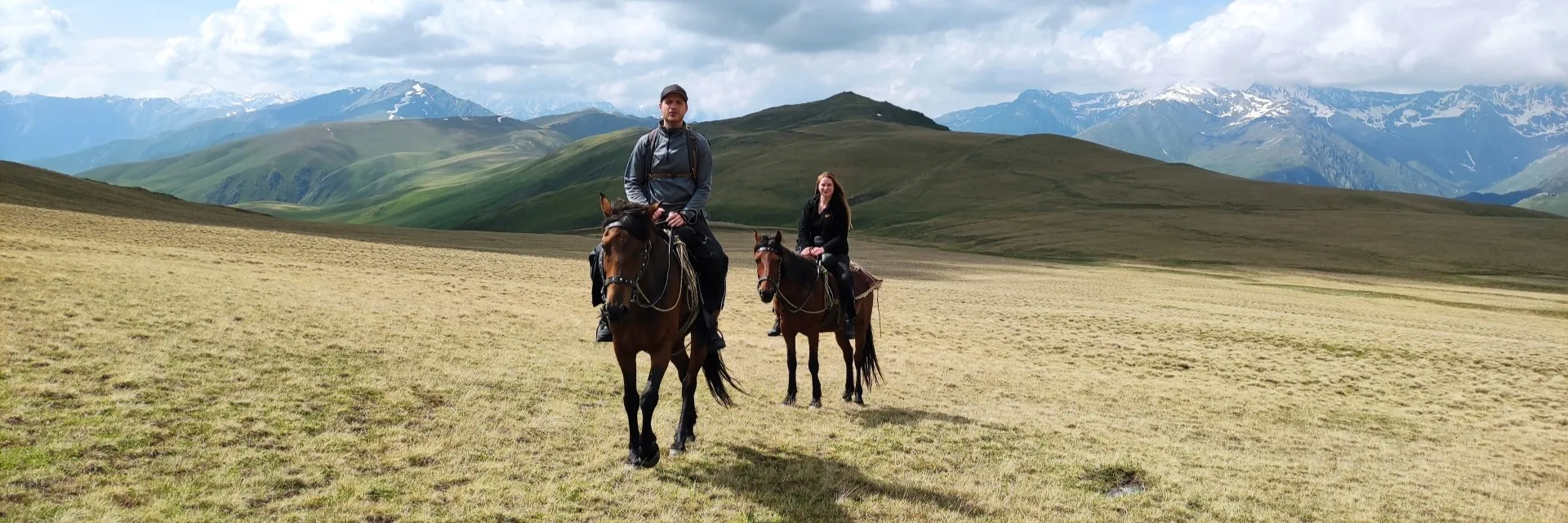
Horseback Riding in Tusheti: The Ultimate Caucasus Equestrian Guide →
Tsovata Gorge Wilderness Circuit
Distance: ~25 km | Duration: 2 Days | Difficulty: Demanding
An expedition into the uninhabited homeland of the Tsova-Tush (Batsbi). Traverses rough river canyons and forgotten stone towers in Indurta and Sagirta. Requires self-sufficient trekking, sturdy river footwear, and wild camping gear.
• Key Highlight: Complete solitude, haunting stone ruins, untouched mountain rivers.
07. Tusheti Packing Checklist: Alpine Wilderness Essentials
Alpine Clothing & Footwear
• Sturdy, broken-in ankle-support hiking boots (rocky shale trails tear soft sneakers).
• 3-layer system: Thermal base, fleece mid-layer, and windproof/waterproof rain shell (Gore-Tex).
• Warm beanie and gloves (high passes drop near freezing even in mid-July).
Off-Grid Power & Tech
• 20,000+ mAh rugged power bank (solar charging at guesthouses can be slow or unavailable).
• Offline GPS maps downloaded in advance (Maps.me, Wikiloc, or Gaia GPS).
• Headlamp with spare batteries/cable (village lighting is minimal to zero).
Health & Logistics
• Comprehensive personal first-aid kit (nearest pharmacy is in Telavi, 5–6 hours away).
• Electrolyte powder & reusable water bottle/collapsible bladder.
• UV 400 Polarized sunglasses & 50+ SPF sunscreen (high-altitude solar radiation is intense).
08. Frequently Asked Questions: Tusheti Travel Guide
Do I strictly need a 4x4 vehicle to reach Tusheti?
🚙 Local 4×4 Road Guidance:
Yes, non-negotiably. The road over Abano Pass is an unpaved, rock-strewn mountain track with water crossings and steep gradients.
• Mandatory: A capable high-clearance 4WD/off-road vehicle.
• Strictly Avoid: Standard passenger sedans, low-slung AWD crossovers, and drivers without mountain terrain experience.
• Safety Note: Continuous engine braking is essential on the 2,000m descent to prevent brake failure.
When does the road over Abano Pass open and close?
🗓️ Seasonal Access Window:
The Abano Pass is cleared and navigable for roughly 4 to 5 months each year.
• Opening: Typically early to mid-June, once heavy snowdrifts and spring landslides are cleared by road crews.
• Closing: Usually mid-to-late October when winter snow blankets the pass.
• Autumn Caution: Sudden early snowfalls can temporarily trap vehicles or halt traffic as early as late September. Always check live pass status before departure.
Are there ATMs or credit card terminals in Tusheti?
💵 Cash & Banking Reality:
There are zero ATMs, banks, or currency exchange points anywhere in Tusheti.
• 100% Cash Economy: You must withdraw all necessary Georgian Lari (GEL) in cash before heading into the mountains.
• Last ATM Stop: Telavi or Kvemo Alvani are your final opportunities to withdraw cash.
• Card Terminals: POS card readers are virtually nonexistent across guesthouses due to unstable power grids and fluctuating network coverage.
How is mobile connection and internet in the valleys?
📱 Local Connectivity Dispatch (2026 Verification):
Magti provides consistent 4G signal across Lower and Upper Omalo, Keselo, and parts of Dartlo, but drops completely once you cross into deeper gorges like Tsovata. Silknet has reliable coverage around Omalo center. For off-grid villages, most active guesthouses in Pirikiti and Gometsari now operate Starlink satellite Wi-Fi in the evenings.
Is pork meat allowed in Tusheti?
🚫 Strict Pork Taboo & Sacred Customs:
Absolutely not. Tusheti strictly observes an ancient religious and cultural taboo prohibiting pork and wild boar across the entire region.
• Zero Tolerance: Never bring pork products (sausages, bacon, lard, salami, or canned pork) past the Abano Pass.
• Guesthouses & Cooking: Preparing or consuming pork in village guesthouses or public outdoor areas is considered a severe cultural offense.
• Gear & Luggage: Standard processed cowhide leather hiking boots are completely fine, but avoid raw pigskin gear or accessories.
Are Caucasian Shepherd Dogs dangerous for hikers, and how should I react?
🐕 Shepherd Dogs (Nagazi) Safety Protocol:
Caucasian Shepherd dogs (Nagazi) are working guardians protecting livestock against wolves and bears. They are territorial and perceive sudden movement as a threat.
• Do Not Run: Stop immediately if dogs approach. Never turn your back or run.
• Trekking Poles Down: Keep hiking poles pointed down by your sides; raising them overhead looks like an attack posture.
• Avoid Eye Contact: Do not stare directly into their eyes; remain still and calm.
• Call the Shepherd: Shout firmly for the shepherd (“Mtsqemsi!”).
• Wide Berth: Once the flock moves or the shepherd commands the dogs, walk slowly around them at a wide, respectful distance.
Ready to Plan Your Tusheti Journey?
Planning your route through the high passes? Whether you need a dedicated 4×4 mountain driver from Alvani, luggage transfers between trailheads, or a private guided itinerary, get in touch to coordinate dates and route logistics.