
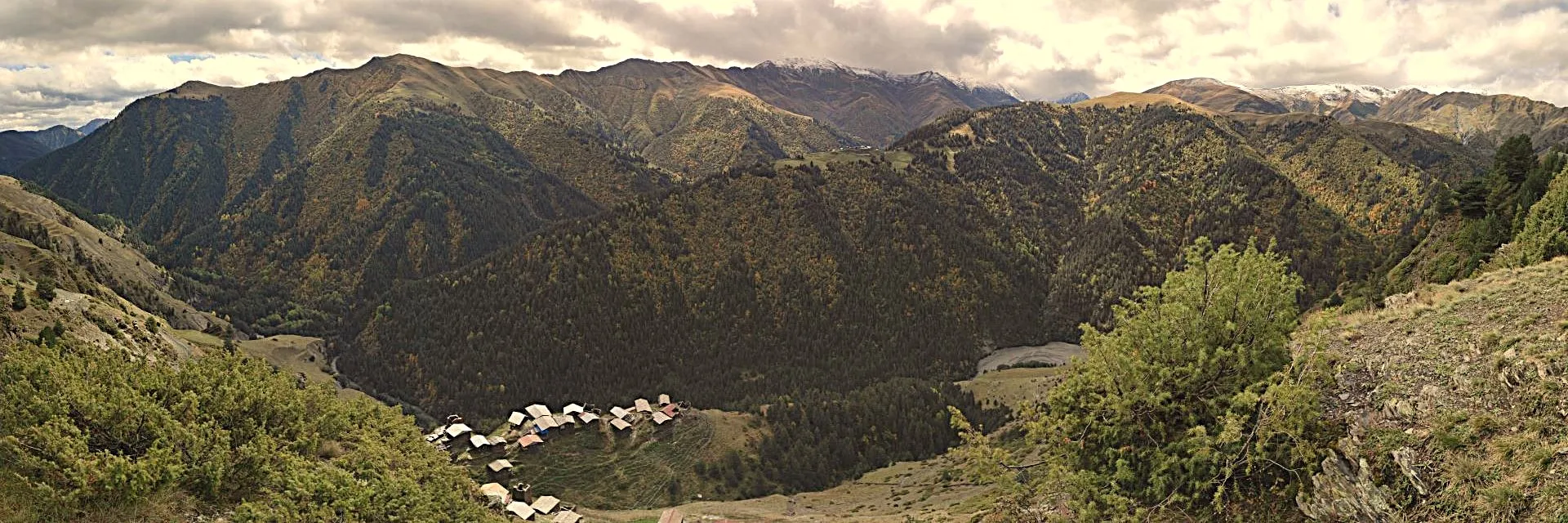
The Confluence of Aragvi and Mtkvari: Where Rivers, Faith, and Empires Converge

Confluence of Aragvi and Mtkvari rivers viewed from Jvari Monastery

The Confluence of Aragvi and Mtkvari: Where Rivers, Faith, and Empires Converge

Standing high on the limestone cliff of Jvari Monastery, every traveler’s eyes are immediately drawn to a mesmerizing natural spectacle below: the dramatic confluence of Aragvi and Mtkvari. Here, two distinct lifelines of the Caucasus collide, carving through the historic heart of Georgia. For hundreds of meters downstream from the ancient capital of Mtskheta, their waters flow side by side without fully mixing—a vivid visual contrast where the emerald-tinted glacial currents of the Aragvi meet the silt-laden, ochre stream of the mighty Mtkvari.

The Science and Hydrology: Why Don’t the Rivers Mix?

Visitors peering down from the clifftop often wonder why the border between the two currents remains sharply defined like a line drawn in paint. The explanation lies in alpine hydrology. The Aragvi originates high in the Great Caucasus range, carrying cold, clean meltwater with low sediment volume. In contrast, the Mtkvari travels across dry clay basins and volcanic plateaus, heavily saturating its water with mineral silt. Furthermore, the Aragvi’s mountain flow is colder and denser than the slower-moving Mtkvari, creating a physical barrier that prevents immediate blending of the Aragvi and Mtkvari waters.

The Literary Legend: Lermontov and the Romantic Era

The poetic magic of this landscape was immortalized in 19th-century classical literature. Exiled to the Caucasus, Russian poet Mikhail Lermontov was so spellbound by the view of Aragvi and Mtkvari from Jvari Monastery that he opened his masterpiece poem, Mtsyri (The Novice), with an homage to the two rivers flowing like sisters in an embrace.

“A few years since, where, rushing wild,

Aragva and Kura embrace,

Like two sisters in deep embrace,

There stood a monastery.”

Mikhail Lermontov, Mtsyri

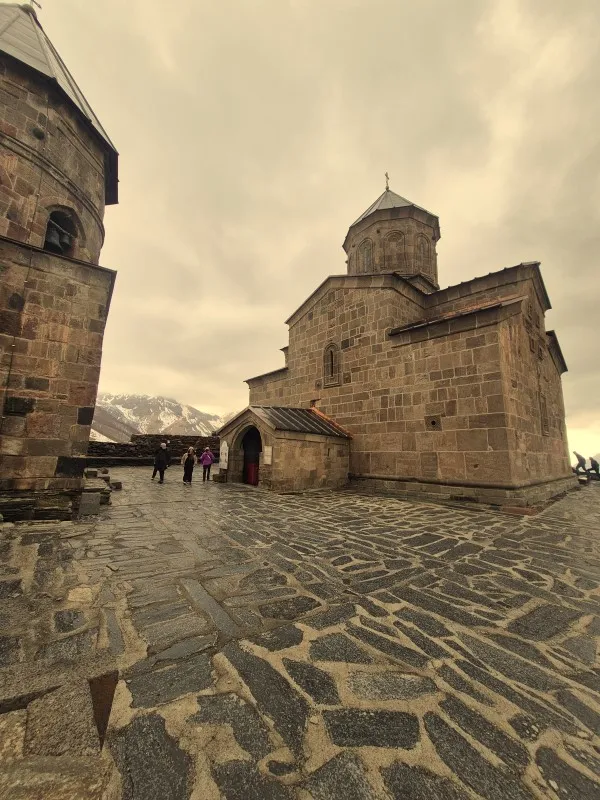
Medieval Stone Architecture and Courtyard of Gergeti Trinity Church

Highlights of the Sacred Confluence

The Safehouse of Relics

In the 4th century, when Saint Nino converted King Mirian III to Christianity, this river confluence served as the historic baptismal waters for the royal court and the citizens of Iberia.

Imperial Crossroads

Roman legions under Pompey in 65 BC camped along these riverbanks, securing the river junction as the primary strategic corridor toward the Dariali Pass.

Iconic Viewpoint

Perched on a 150-meter vertical cliff, the terrace of the 6th-century Jvari Monastery frames the dramatic river divide directly against Svetitskhoveli Cathedral.

Practical Travel Tips & Best Viewpoints

  • Best Vantage Point: The southern stone terrace of Jvari Monastery offers an unobstructed panoramic view of the meeting point of Aragvi and Mtkvari.

  • Photography & Golden Hour: Mid-morning or late afternoon provides optimal sunlight across the water, accentuating the sharp contrast between the green and silted waters.

  • Getting There: Located just 25 minutes (20 km) north of Tbilisi via the E60 highway, making it an essential first stop when heading toward Mtskheta or Kazbegi.

  • Local Culinary Stops: Combine your visit with fresh Aragvi river trout at traditional riverside restaurants in nearby Armazi.

Explore Our Tours

Experience this iconic confluence and ancient fortresses on our private Spectacular Mtskheta Day Tour.

Scroll to Top